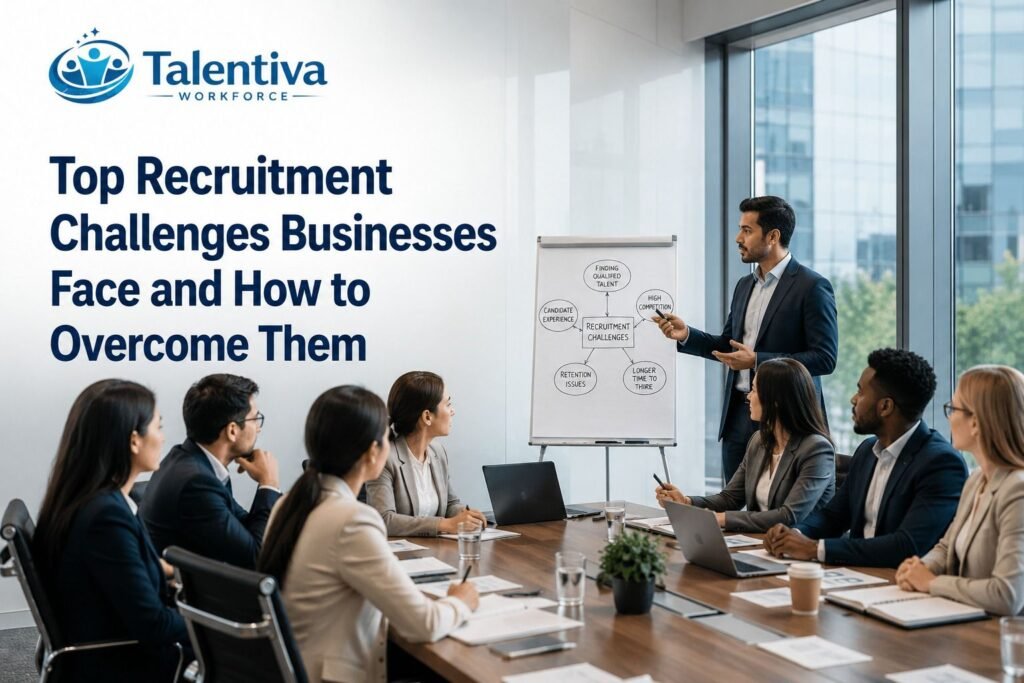
Top Recruitment Challenges Businesses Face and How to Overcome Them
Introduction Recruiting the right talent has become one of the most important priorities for businesses across all industries. Companies need skilled professionals to drive growth, improve productivity, and maintain a competitive advantage. However, finding qualified candidates is becoming increasingly difficult in today’s evolving job market. Organizations often face numerous hiring obstacles, from talent shortages and lengthy recruitment processes to rising hiring costs and employee retention concerns. These challenges can slow business growth and impact overall performance. Understanding the most common recruitment challenges businesses face and implementing effective solutions can help organizations build stronger teams and achieve long-term success. The Growing Complexity of Recruitment The hiring landscape has changed significantly over the past decade. Digital transformation, remote work opportunities, changing candidate expectations, and increased competition for talent have created new challenges for employers. Businesses now compete not only with local companies but also with organizations across the country seeking the same skilled professionals. As a result, recruitment has become more strategic than ever before. U.S. Bureau of Labor Statistics Challenge 1: Talent Shortages One of the biggest recruitment challenges businesses face is the shortage of qualified candidates. Many industries experience a gap between available jobs and skilled professionals. This shortage is particularly common in: When businesses cannot find qualified candidates, projects may be delayed, productivity can decrease, and growth opportunities may be missed. How to Overcome It Companies can address talent shortages by: Building long-term recruitment strategies helps organizations access a wider pool of qualified candidates. Challenge 2: Long Hiring Processes Many businesses lose top candidates because their hiring process takes too long. Job seekers often receive multiple offers. Delays in screening, interviewing, and decision-making can result in candidates accepting positions elsewhere. A lengthy recruitment process can also increase hiring costs and create operational disruptions. How to Overcome It Organizations should streamline recruitment by: Faster hiring processes improve candidate experience and increase offer acceptance rates. Challenge 3: Attracting High-Quality Candidates Finding applicants is not always difficult. Finding the right applicants is often the real challenge. Many companies receive large numbers of applications but struggle to attract candidates with the skills and experience required for specific roles. How to Overcome It Businesses can improve candidate quality by: A strong employer reputation attracts better candidates and improves recruitment outcomes. Challenge 4: Rising Recruitment Costs Hiring new employees can be expensive. Recruitment expenses often include: When positions remain vacant for extended periods, costs can increase even further. How to Overcome It Businesses can reduce hiring costs by: A proactive hiring strategy helps organizations control recruitment spending. Challenge 5: Skills Gaps Rapid technological advancement has created significant skills gaps across many industries. Organizations frequently struggle to find professionals with specialized expertise in areas such as: How to Overcome It Companies should focus on: Continuous learning programs help businesses stay competitive while addressing skill shortages. Challenge 6: Candidate Experience Issues Today’s job seekers expect a smooth and professional hiring experience. Poor communication, complicated application processes, and delayed feedback can damage an employer’s reputation. Negative candidate experiences may discourage future applications and affect employer branding. How to Overcome It Businesses should: Positive candidate experiences improve employer reputation and hiring success. Challenge 7: Employee Retention Problems Recruitment does not end when a candidate accepts a job offer. Many businesses struggle with high employee turnover, which increases hiring costs and disrupts operations. Frequent turnover can lead to: How to Overcome It Organizations can improve retention by: Retaining top talent reduces recruitment pressure and supports long-term growth. Challenge 8: Adapting to Remote Hiring Remote work has transformed recruitment strategies. Many businesses now recruit candidates from different states or even countries. While this expands talent pools, it also creates new hiring challenges. How to Overcome It Companies should: Effective remote recruitment practices help businesses attract talent regardless of location. Challenge 9: Diversity and Inclusion Hiring Goals Organizations increasingly recognize the value of diverse and inclusive workplaces. However, achieving diversity goals can be challenging without intentional recruitment strategies. How to Overcome It Businesses should: Diverse teams often bring broader perspectives and stronger innovation. Challenge 10: Workforce Planning Uncertainty Economic changes, market shifts, and evolving customer demands can make workforce planning difficult. Businesses often struggle to predict future hiring needs accurately. How to Overcome It Organizations can improve workforce planning by: Strategic workforce planning reduces recruitment disruptions and supports business growth. The Role of Staffing Agencies in Solving Recruitment Challenges Many businesses partner with staffing agencies to overcome recruitment obstacles. Professional staffing firms provide: Staffing agencies help organizations focus on core business activities while recruitment professionals manage talent acquisition. How Talentiva Workforce Helps Businesses Hire Smarter At Talentiva Workforce, we understand the recruitment challenges businesses face in today’s competitive market. Our staffing solutions help employers: We work closely with organizations to develop customized recruitment strategies that align with their workforce goals and long-term success. Conclusion Recruitment challenges continue to evolve as workforce expectations and business needs change. Talent shortages, hiring delays, skills gaps, and retention concerns can impact organizational growth if not addressed effectively. By implementing strategic recruitment practices, leveraging technology, improving candidate experiences, and partnering with trusted staffing professionals, businesses can overcome these challenges and build stronger teams. Organizations that invest in smarter hiring strategies today will be better positioned for long-term success in an increasingly competitive talent market.